Sale
Piper-Heidsieck Essentiel Blanc de Blancs (Gift Boxed)
Product Description:Purity, freshness and fine mineral definition shape Piper-Heidsieck Essentiel Blanc de Blancs, an Extra Brut Champagne presente...
View full details
Sale
Product Description:Purity, freshness and fine mineral definition shape Piper-Heidsieck Essentiel Blanc de Blancs, an Extra Brut Champagne presente...
View full details
Sale
Product Description:Savoury complexity, mature-vine concentration and finely controlled structure define the Bannockburn Pinot Noir 2025, a distinc...
View full details
Sale
Product Description:Estate-grown depth, cool-climate precision and mature-vine complexity define the Bannockburn Chardonnay 2025, a distinguished e...
View full details
Sale
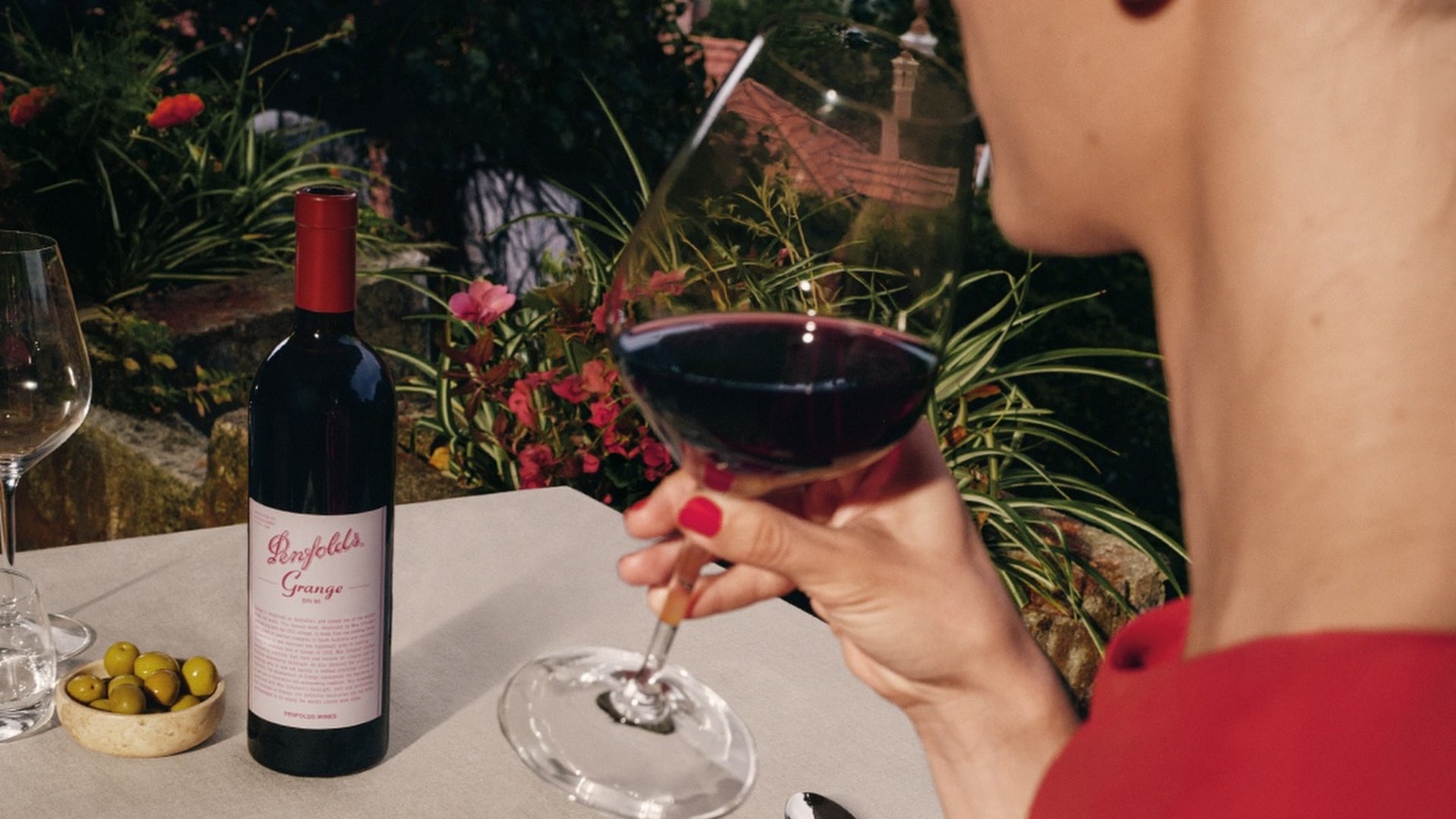
Product Description:Depth, authority and extraordinary ageing potential define the Penfolds Bin 95 Grange Shiraz 2022. Grange represents the most p...
View full details
Sale
The Penfolds Grange TrilogyThree defining vintages. One iconic wine. A collector's moment. Some wines are made. Grange is composed. Since 1951, it...
View full detailsREVIEWS + ACCOLADES
97 Points
Power, precision and exceptional longevity define the Penfolds Bin 707 Cabernet Sauvignon 2024. First produced in 1964, Bin 707 represents Cabernet Sauvignon through the distinctive Penfolds House Style of intensely flavoured fruit, multi-regional blending and maturation in new oak. The wine is not released automatically every year, with Penfolds withholding the label whenever fruit of the required style and quality is unavailable. The 2024 release is sourced from Coonawarra, the Barossa Valley and Padthaway, bringing together fruit from three distinguished South Australian Cabernet regions. Coonawarra contributes structural definition and varietal clarity, while the Barossa Valley brings concentration and Padthaway adds depth and balance. The season began with below-average winter rainfall, naturally moderating vine vigour and reducing soil-moisture reserves. Variable spring conditions affected fruit set in parts of the Barossa Valley, while Coonawarra and Padthaway progressed under cooler conditions.
Timely December rainfall supported healthy canopy development before warm and dry weather prevailed throughout much of the ripening period. Warm conditions in February and early March encouraged small berries and concentrated flavour, while cooler nights and settled April weather allowed measured harvesting decisions. The wine was matured for 16 months in American oak hogsheads, all of which were new, reinforcing the powerful and age-worthy Bin 707 style. Its impenetrable colour introduces expressive aromas of blueberry, mariposa plum, blackcurrant and cassis alongside aniseed, black olive and rhubarb. Graphite, whetstone, walnut, sandalwood and cedar provide further savoury and oak-derived complexity. The palate combines impressive density with finesse, supported by abundant fine-grained tannins and refreshing acidity. Blue and violet fruit notes meet savoury nuances of lamb jus and pan scrapings, creating a layered and confidently structured expression. Although formidable in its youth, the wine possesses the balance and concentration to develop through Penfolds’ recommended drinking window of 2028 to 2060.
Power, precision and exceptional longevity define the Penfolds Bin 707 Cabernet Sauvignon 2024. First produced in 1964, Bin 707 represents Cabernet Sauvignon through the distinctive Penfolds House Style of intensely flavoured fruit, multi-regional blending and maturation in new oak. The wine is not released automatically every year, with Penfolds withholding the label whenever fruit of the required style and quality is unavailable. The 2024 release is sourced from Coonawarra, the Barossa Valley and Padthaway, bringing together fruit from three distinguished South Australian Cabernet regions. Coonawarra contributes structural definition and varietal clarity, while the Barossa Valley brings concentration and Padthaway adds depth and balance. The season began with below-average winter rainfall, naturally moderating vine vigour and reducing soil-moisture reserves. Variable spring conditions affected fruit set in parts of the Barossa Valley, while Coonawarra and Padthaway progressed under cooler conditions.
Timely December rainfall supported healthy canopy development before warm and dry weather prevailed throughout much of the ripening period. Warm conditions in February and early March encouraged small berries and concentrated flavour, while cooler nights and settled April weather allowed measured harvesting decisions. The wine was matured for 16 months in American oak hogsheads, all of which were new, reinforcing the powerful and age-worthy Bin 707 style. Its impenetrable colour introduces expressive aromas of blueberry, mariposa plum, blackcurrant and cassis alongside aniseed, black olive and rhubarb. Graphite, whetstone, walnut, sandalwood and cedar provide further savoury and oak-derived complexity. The palate combines impressive density with finesse, supported by abundant fine-grained tannins and refreshing acidity. Blue and violet fruit notes meet savoury nuances of lamb jus and pan scrapings, creating a layered and confidently structured expression. Although formidable in its youth, the wine possesses the balance and concentration to develop through Penfolds’ recommended drinking window of 2028 to 2060.
Cabernet from Coonawarra was excellent in 2024 and core to this 707, joined by fruit from the Barossa Valley and Padthaway. Maturation was in American oak hogsheads, new, for sixteen months. A very dark purple/magenta, the nose exhibits aromas of dark plums, cassis, cigar boxes, chocolate, vanilla, spices and dried herbs. Early complexity is most certainly evident. On the palate we move to even more intricate flavours, including blackberries and blueberries, smoked meats, beef stock, tapenade, coffee beans and tobacco leaves. A wine with focus and balance, satiny tannins and serious length, with its intensity maintained throughout. A wonderful 707 for enjoying over the next three decades, during which we can expect that there is every chance the score might edge up just a smidge.
Cabernet Sauvignon from Coonawarra, Barossa Valley and Padthaway; 16 months in 100% new American oak hogsheads. The flagship Cabernet in the Penfolds stable continues to champion the house philosophy of multi-regional blending, marrying the structure of Coonawarra with Barossa Valley depth and Padthaway generosity. Matured exclusively in new American oak, Bin 707 remains one of Australia’s most ageworthy expressions of Cabernet Sauvignon. Deep and commanding from the outset with blackcurrant, cassis, blackberry and dark plum wrapped around black olive, graphite, cedar, tobacco leaf and dark chocolate. The palate is dense and authoritative, layering blackcurrant, blackberry, liquorice, cedar spice and cocoa over a frame of substantial but beautifully ripe tannins. Concentration is exceptional without feeling cumbersome, while bright acidity keeps the wine remarkably energetic through an exceptionally long finish. A commanding release with decades ahead of it.
This is a massive and unnerving Bin 707, and I am getting the same vibes as villagers do in Game of Thrones when the silhouette of a massive dragon passes behind a cloud. It’s not often a wine makes me feel this much on edge. And unlike RWT, which turns Hyde to Jekyll, this wine is malevolent, confrontational and all-powerful. Thank goodness then the nose is intensely Cabernet-soaked and identifiable because the rest of the wine is a leviathan. It’s too much for me, so I will duck out. But lovers of structured, imposing Cabernet will perform cartwheels for this wine. My score reflects its dimensions.
Founded in 1844 by Dr Christopher and Mary Penfold at Magill Estate in South Australia, Penfolds has grown from a small colonial winery into one of Australia’s most significant wine producers. Its history has been shaped by generations of winemakers willing to challenge convention while preserving a remarkably consistent approach to style and quality.
Mary Penfold played a defining role in the winery’s early development, overseeing production and experimenting with grape varieties and winemaking techniques as the estate expanded. A century later, Max Schubert would transform Penfolds again. Appointed the company’s first Chief Winemaker in 1948, his ambition to create an Australian red capable of developing over decades led to the first experimental Grange in 1951.
That spirit of experimentation has continued through successive generations of Penfolds winemakers. From benchmark Australian wines including Grange, St Henri and Bin 707 to contemporary projects extending beyond Australia, the House has continued to evolve while maintaining a winemaking lineage stretching back more than 180 years.
Penfolds has long approached wine differently. Rather than defining its greatest wines exclusively through a single vineyard or region, the House has built its reputation around a philosophy of blending across vineyards, districts and, where appropriate, regions to achieve a consistent expression of style.
This approach allows the winemaking team to select fruit according to quality and character rather than geography alone. South Australia remains fundamental, with regions including the Barossa Valley, Coonawarra, McLaren Vale and Adelaide Hills contributing distinctive elements across the portfolio. Individual vineyards also play important roles, including the historic Magill Estate and Kalimna Vineyard.
Continuity is equally important. Each generation of Penfolds winemakers inherits established wine styles rather than simply imposing its own, refining them as vineyards, vintages and winemaking evolve. Structure, balance and the capacity to develop with age remain central to many of the House’s most important wines.
Today, that philosophy extends from Australia to winemaking projects in California, France and China. The geography may have expanded, but the underlying idea remains recognisably Penfolds: sourcing exceptional fruit and bringing its components together to create a wine greater than any single element.
Blueberry, mariposa plum, blackcurrant and cassis with aniseed, black olive, rhubarb, graphite, walnut, sandalwood and cedar.
Dense blue and black fruits supported by violet, savoury lamb jus, fine pixelated tannins and tightly controlled acidity.
Persistent cassis, graphite, savoury complexity and polished oak carried by abundant fine-grained tannins.