Sale
Penfolds Grange + St Henri: The Collector's Set
Two of Australia's most enduring red wine expressions, together in one collection. Grange and St Henri represent opposite poles of the Penfolds phi...
View full details
Sale
Two of Australia's most enduring red wine expressions, together in one collection. Grange and St Henri represent opposite poles of the Penfolds phi...
View full details
Sale
Product Description:Celebratory elegance and classic Champagne craftsmanship define this special edition release from the historic house of Taittin...
View full details
Sale
Product Description:Elegant concentration and finely tuned structure define this expressive Central Otago Pinot Noir from one of Bannockburn’s benc...
View full details
Sale
Product Description:Bright Tasmanian purity and understated complexity define this elegant cool-climate Pinot Noir. The 2025 Pooley Pinot Noir is ...
View full details
Sale
Product Description:Rich texture and southern Rhône elegance define the Château Mont-Redon Châteauneuf-du-Pape Blanc 2024, a beautifully composed w...
View full detailsREVIEWS + ACCOLADES
97 Points
Late-harvest clarity from a vineyard with quiet power. The 2023 Graacher Himmelreich Auslese from Joh. Jos. Prüm captures everything we love about the Middle Mosel: ripeness, restraint, and a crystalline line of acidity running through layers of late-harvest fruit. Graacher is often overlooked next to its neighbour Wehlen, but its slightly gentler slope and deeper soils give it a quiet strength—especially in warm vintages like 2023.
Expect an Auslese that’s rich but finely drawn, with notes of mint, chamomile, and juicy orchard fruit overlaid with stony minerality. It’s sweet, yes—but pure, never cloying. This is a wine for the cellar, but there’s no shame in opening one early to experience its energy.
Serve it with roast duck, aged cheeses, or Sichuan spice. If you’re patient, revisit it in 2033 to see what grace truly tastes like.
Late-harvest clarity from a vineyard with quiet power. The 2023 Graacher Himmelreich Auslese from Joh. Jos. Prüm captures everything we love about the Middle Mosel: ripeness, restraint, and a crystalline line of acidity running through layers of late-harvest fruit. Graacher is often overlooked next to its neighbour Wehlen, but its slightly gentler slope and deeper soils give it a quiet strength—especially in warm vintages like 2023.
Expect an Auslese that’s rich but finely drawn, with notes of mint, chamomile, and juicy orchard fruit overlaid with stony minerality. It’s sweet, yes—but pure, never cloying. This is a wine for the cellar, but there’s no shame in opening one early to experience its energy.
Serve it with roast duck, aged cheeses, or Sichuan spice. If you’re patient, revisit it in 2033 to see what grace truly tastes like.
This youthful Mosel riesling Auslese has a vibrancy and precision that is often missing in these wines... I love the mint and chamomile freshness... Incredible precision and subtlety in the super‑long finish. Try to be patient... best from 2026.
Very clear and precise on the elegant and delicate nose … mango and other tropical as well as ripe peach aromas. Savory and crystalline on the palate … stimulating juiciness, grip and salivating salinity. The finish is long, playful and irresistible.
Made virtually without botrytis … offers Mirabelle jelly … lemon balm and fern … finish like yellow-plum sorbet—fresh, palate‑cleansing, yet sweet. Incredibly fine, slender and so balanced.
Petrol and crushed slate lay the foundation … green apple and meadow blossoms. Silky palate with depth and finely beaded acidity. A pristine, pure style, with real delicacy.
The Prüm family story in the Mosel dates back to 1156, beginning with was Johann Josef Prüm (1873 - 1944) who founded the estate in 1911. By the mid-1930s Johann Josef’s son, Sebastian, forged the distinctive style of the Prüm wines. From 1969, the imitable Dr Manfred Prüm would elevate Joh. Jos. Prüm to even greater heights, today the estate is run by Manfred’s daughter Katharina Prüm who watches over 13.5 hectares of vines on the harrowing slate-rich slopes of the Middle Mosel. In The Wines of Germany, Stephen Brook writes “With the rise of so many excellent winemakers in the Mosel, one might have supposed that Joh. Jos. Prüm, with its profound conservatism, might have been overtaken and left behind. Not a bit of it. The Estate remains where it has been for decades: at the summit.” Which begs the question, what is the secret to J.J. Prüm's continued success? How do they stand out among top Mosel producers? It’s all about their exceptional vineyards: old vines at great sites, keeping the lowest yields, daring but calculated late harvesting, and a careful selection of the finest berries.
Joh. Jos. Prüm's vineyards are at forefront of the estate's success. Their holdings include vineyards - Wehlener Sonnenuhr, Graacher Himmelreich, Bernkasteler Lay, Bernkasteler Badstube and Zeltinger Sonnenuhr. All of these sites are exclusively dedicated to growing and harvesting Riesling grapes for Joh. Jos. Depending on the specific vintage, the average annual production of wine is typically between 10,000 to 13,000 cases.
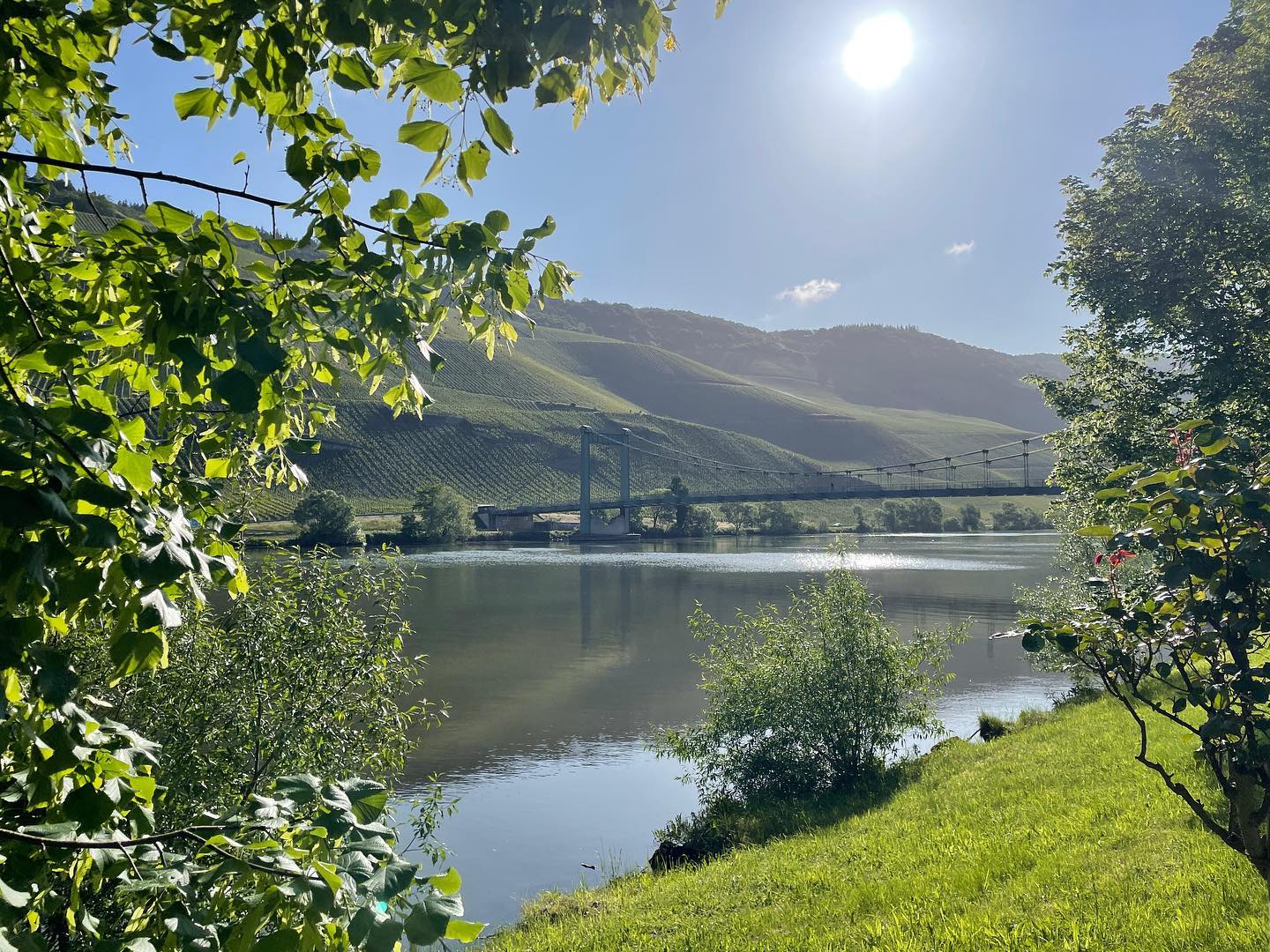
Prum’s four key vineyards are all located on the same continuous slope, all on a mixture of grey and blue Devonian slate soils with varying south-to-south westerly aspects. Positioned in the heart of Mosel the vineyards are named from south to north: Bernkasteler Badstube, Graacher Himmelreich, Wehlener Sonnenuhr, and Zeltinger Sonnenuhr. These vineyards have been in continuous production for some 2000 years.
The major differences between the sites have to do with the variation in the aspect (from south to southwest) and the steepness and the depth of the soil. These are subtle differences, but make for wonderfully distinctive wines. Of course all the vineyards of J.J. Prüm are renowned, but the majestic Wehlener Sonnenuhr vineyard that is the most famous. The revered site lies opposite the village of Wehlen and the Estate owns seven hectares—largely planted to ungrafted wines—which has very thin topsoil over Devonian slate (in some areas of the vineyard the plants grow out of pure rock!). Wehlener Sonnenuhr has the highest pure stone content of all the Prüm vineyards, and along with neighbouring Zeltinger, the steepest of Prüm’s vineyards—with a dizzying 65-70% gradient in places. Wine writer Stuart Pigott summarises perfectly, “In top vintages the Wehlener Sonnenuhr yields the richest, silkiest, most seductive wines on the Mosel. The fame of these Rieslings is inextricably linked with that of the Joh Jos Prüm estate.”
Mint, chamomile and ripe citrus with slatey lift and botrytis spice.
Medium-bodied and concentrated, with layers of yellow fruit and zesty brightness.
Super-long and mineral, carrying the Auslese sweetness on a sleek, acid-driven spine.