Lake's Folly Chardonnay 2025
Product Description:Lake’s Folly Chardonnay 2025 is a refined, estate-grown expression of Chardonnay from one of the Hunter Valley’s most historica...
View full details
Sale
Product Description:Lake’s Folly Chardonnay 2025 is a refined, estate-grown expression of Chardonnay from one of the Hunter Valley’s most historica...
View full details
Sale
Product Description:Structure, savoury depth and dark-fruited precision define By Farr Farrside Pinot Noir 2024, a distinctive single-site Pinot No...
View full details
Sale
Product Description:Depth, freshness and unmistakable Mediterranean character define the Domaine Tempier Bandol Rosé 2025, a benchmark expression o...
View full details
Sale
Product Description:Experimental whisky-making, intense Islay peat and remarkable depth define the Laphroaig Elements 3.0 Single Malt Scotch Whisky...
View full details
Sale
Product Description:Perfume, finesse and seamless structure define By Farr Sangreal Pinot Noir 2024, one of the estate’s most important single-vine...
View full details
The Faset Barbaresco is the closest wine in David’s bottlings to Barolo in style. 2019 was the first year David has bottled Faset as a single Cru. David describes Faset as having an ‘unparalleled richness’, a trait shared due to the similar soils with Asili, Rabaja and Rio Sordo; "Faset has the densest biggest structure of the Cru’s I make, more Barolo than Barbaresco.”
In the review tasting of the three wines this Cru definitely has the most fruit and density to the wine, highly aromatic, so much classic tar and roses in this wine. Faset is on the same soil as Roncaglie but is just slightly cooler, and usually picked later than Roncaglie.
This wine is 100% destemmed. Open ferment. Pressed to barrel. Elevage in old oak, over 10 years old, 300ltr barrels. Barbaresco can only be released on the 3rd January following harvest, giving the wine approx. 27 months total aging. David ages his wines for 24 months in barrel (legally it only needs be 12 as a minimum) then 3 months in bottle.
The 2021 vintage is one that will likely go down as better in Barbaresco. It was overall a very drought but not hot vintage; and while it was rainy in France and Germany, in Piedmont’s Langa it was actually less rainy but colder than usual. Otherwise, the 2021 vintage was a year of good production as opposed to 2019 (very classic wines), and 2020 (wines with more fruit but less acidity than those of 2021). Fletcher asserts his 2021 wines have more structure than his 2020s, but all are equally fresh. The best of both worlds.
The Faset Barbaresco is the closest wine in David’s bottlings to Barolo in style. 2019 was the first year David has bottled Faset as a single Cru. David describes Faset as having an ‘unparalleled richness’, a trait shared due to the similar soils with Asili, Rabaja and Rio Sordo; "Faset has the densest biggest structure of the Cru’s I make, more Barolo than Barbaresco.”
In the review tasting of the three wines this Cru definitely has the most fruit and density to the wine, highly aromatic, so much classic tar and roses in this wine. Faset is on the same soil as Roncaglie but is just slightly cooler, and usually picked later than Roncaglie.
This wine is 100% destemmed. Open ferment. Pressed to barrel. Elevage in old oak, over 10 years old, 300ltr barrels. Barbaresco can only be released on the 3rd January following harvest, giving the wine approx. 27 months total aging. David ages his wines for 24 months in barrel (legally it only needs be 12 as a minimum) then 3 months in bottle.
The 2021 vintage is one that will likely go down as better in Barbaresco. It was overall a very drought but not hot vintage; and while it was rainy in France and Germany, in Piedmont’s Langa it was actually less rainy but colder than usual. Otherwise, the 2021 vintage was a year of good production as opposed to 2019 (very classic wines), and 2020 (wines with more fruit but less acidity than those of 2021). Fletcher asserts his 2021 wines have more structure than his 2020s, but all are equally fresh. The best of both worlds.
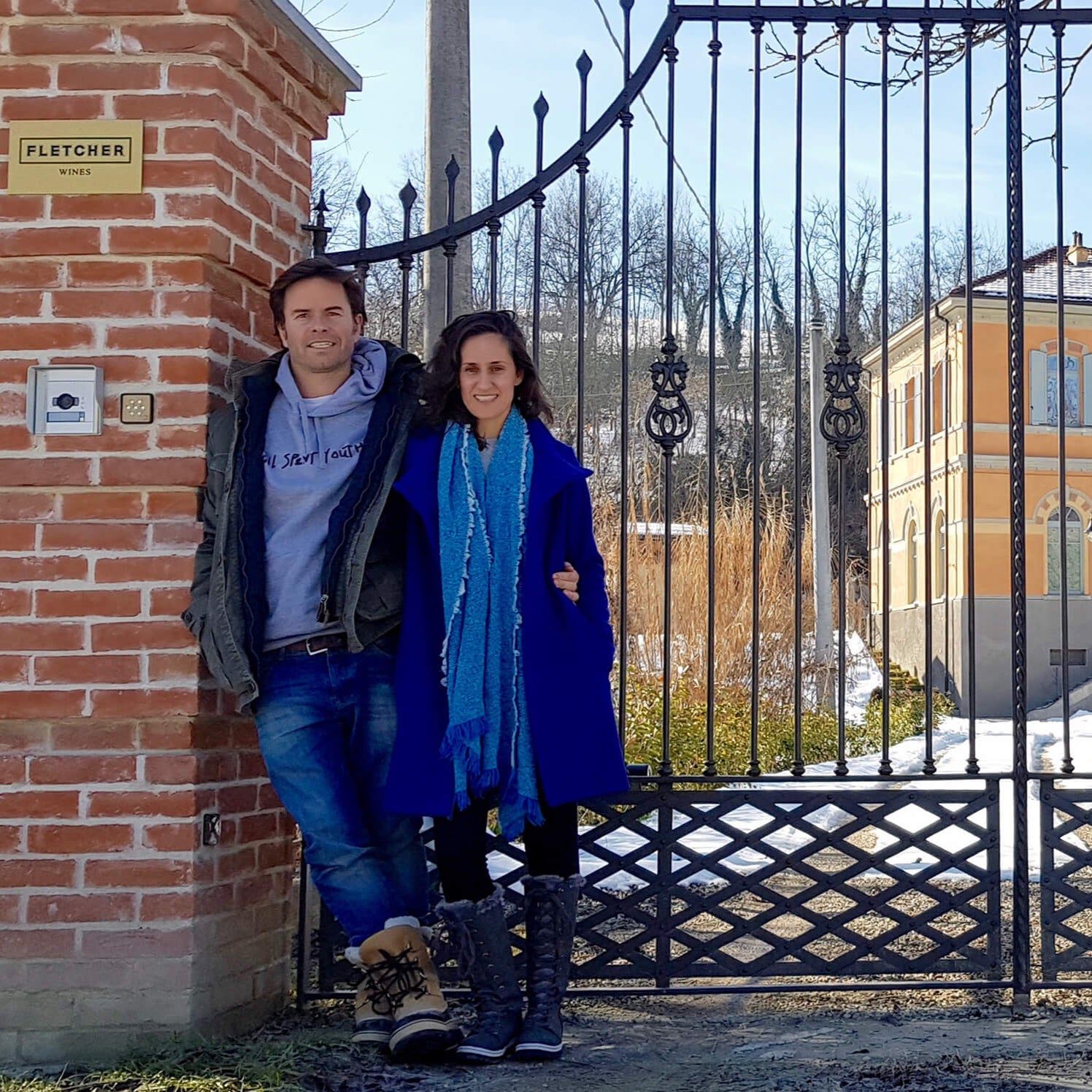
David Fletcher’s journey to producing exceptional Nebbiolo began in 2004, when his passion for this iconic Italian grape led him to Italy. Immersing himself in the traditions of Barbaresco and Barolo, he honed his craft and dedication to Nebbiolo, ultimately creating Fletcher Wines to blend his love for Italian winemaking with Australia’s unique terroir. By 2012, Fletcher settled in Barbaresco, where he continues to produce wines that reflect both the best of Italian tradition and Australian innovation.
Fletcher’s self-professed obsession with Nebbiolo has become the cornerstone of his winemaking philosophy. An Australian by birth, Fletcher’s journey to the Langhe hills of Piemonte was driven by an undeniable passion for Nebbiolo’s transcendent quality, and now, he calls Barbaresco home. Starting his winemaking career early, Fletcher didn’t inherit a winery or follow a family tradition—his passion for winemaking grew organically, alongside his love for the land and the grape variety he reveres. Today, Fletcher’s wines are a testament to his dedication, not only to Nebbiolo but to the unique expression it can have in both Italy and Australia. With the production of no more than 25,000 bottles annually, Fletcher Wines remains a highly sought-after, small-scale winery with a focus on quality over quantity. His ability to craft world-class Nebbiolo, alongside his expanding portfolio of wines, is a reflection of his ongoing commitment to pushing boundaries and continuing the exploration of this exceptional grape.
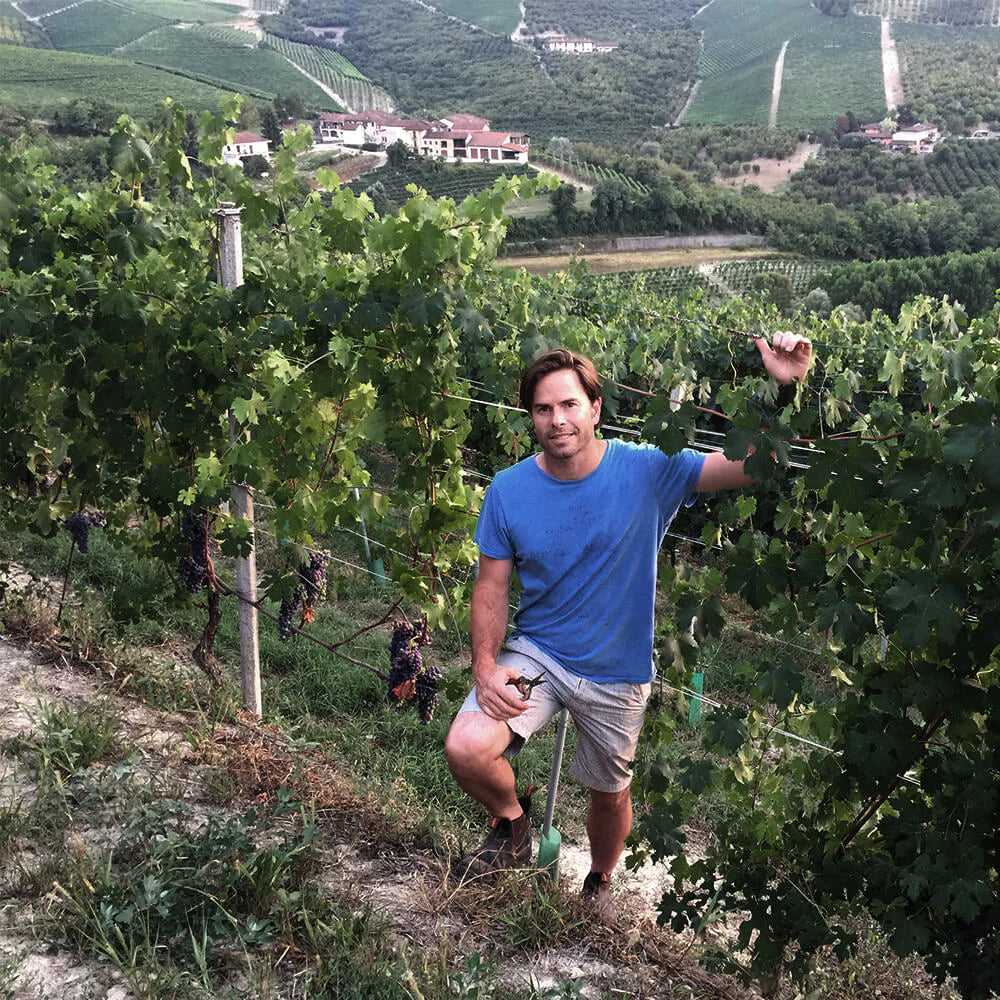
David Fletcher’s winemaking philosophy is built on a foundation of organic viticulture, sustainability, and the pursuit of both tradition and innovation. With a commitment to certified organic vineyards and sites in conversion, Fletcher is dedicated to cultivating healthier vines and creating a lower environmental impact. In response to the increasing monoculture in the Langhe, he has also invested in preserving biodiversity by owning land in forests, swamps, and grasslands, offsetting the land used for grape production.
Fletcher sees himself as fortunate to make wines in the Langhe, a region rich with winemaking history, but he values the freedom to deconstruct tradition and craft wines without boundaries. He embraces spontaneous ferments using the ‘pied de cuve’ method and works with old wood barrels to bring out the unique character of each wine. With a focus on small batches, no filtering or fining, and minimal intervention, Fletcher allows the wine to evolve naturally, reflecting both his passion and the distinctiveness of the terroir. Always searching for the best vineyards, Fletcher’s wines aim to capture a true sense of place and continue to push boundaries, crafting wines that are both innovative and a tribute to the land they come from.
Perfumed, sweet red-fruit nose with an undertow of minerals.
Minerally note over strawberry fruit. Still a little closed on the palate but the fruit is concentrated and it has a super-elegant palate weight.
Nervy long acidity and beautiful chewy tannins that last and last.